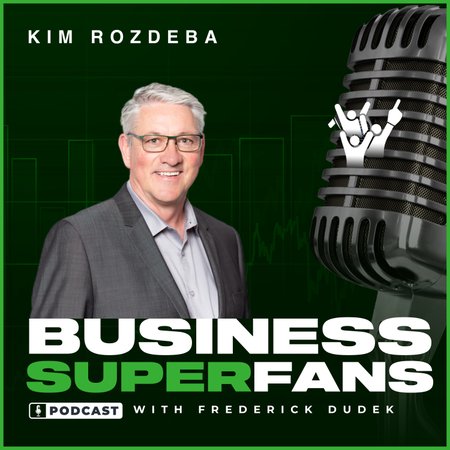
Business Superfans Podcast
Branding Beyond Products: Discovering the Emotional Connection with Kim Rozdeba
Episode 80 Frederick Dudek (Freddy D) Copyright 2025 Prosperous Ventures, LLC
Branding Beyond Products: Discovering the Emotional Connection with Kim Rozdeba
Today, we dive deep into the world of branding with Kim Razdeba, a seasoned brand expert with a career that's shaped some of the biggest names in the biz. Kim breaks down the essence of branding, emphasizing that it’s not just about what a product does; it’s about how it makes people feel. We explore his five Cs of branding: commitment, construction, community, content, and consistency, each crucial in building a brand that resonates and endures. From personal anecdotes, like backpacking on a budget to carrying the Olympic torch, to insights on the power of emotional connections, Kim’s perspective is a treasure trove for anyone looking to elevate their brand. So buckle up as we uncover strategies that not only attract customers but turn them into lifelong superfans.
Discover more with our detailed show notes and exclusive content by visiting: https://bit.ly/3EmIYtk
Kindly Consider Supporting Our Show: Support Business Superfans Podcast
Business Accelerator Collective
This podcast is hosted by Captivate, try it yourself for free.
Takeaways:
- Kim Razdeba emphasizes that building a brand is more than just marketing products; it involves creating an emotional connection that resonates deeply with customers.
- The concept of a brand is rooted in how it makes people feel, not just what it does or says, and this emotional aspect drives loyalty and engagement.
- In branding, the five C's—commitment, construction, community, content, and consistency—form the foundation for effective brand strategy and customer loyalty.
- Community involvement is critical for brands to thrive; happy employees can become powerful brand ambassadors, enhancing customer experiences and brand perception.
Links referenced in this episode:
Companies mentioned in this episode:
- Apple
- Ogilvie and Mather
- Uber
- Airbnb
- Midas Mufflers
- Dunkin Donuts
- Liquid Death
- Coca Cola
- Microsoft
- Disney
- McDonald's
- Virgin
- Virgin Airlines
This podcast uses the following third-party services for analysis:
OP3 - https://op3.dev/privacy
Podtrac - https://analytics.podtrac.com/privacy-policy-gdrp
Podcorn - https://podcorn.com/privacy
Other episodes of this podcast
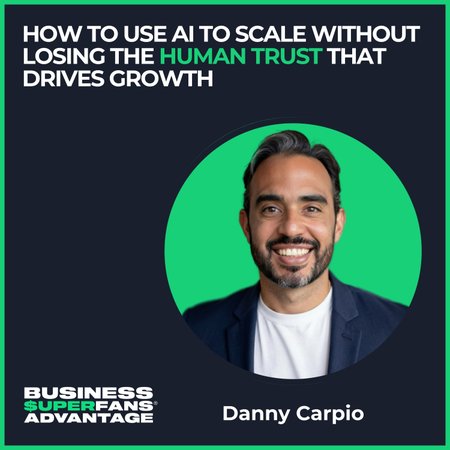
Business Superfans Podcast
How to Use AI to Scale Without Losing the Human Trust That Drives Growth with Danny Carpio | Ep. 226
Danny Carpio, co-founder of Veri and author of The Unfirm, explains how to use AI to scale a business without losing the human trust that drives growth. Most owners are told to adopt every new tool, yet still run a playbook that needs a big team, while competitors learn to do the same work with far fewer people. Danny says a company that once needed 5,000 people to scale could now do it with ten or fifteen, and that Veri's first owned model came in 27 times cheaper than a general one. For owners who want AI's leverage without losing their people. Full show notes and transcript: FrederickDudek.com How to Use AI to Scale Without Losing the Human Trust That Drives Growth with Danny Carpio Why This Conversation Matters AI is collapsing the cost of doing work. Things that once took a large team, years of training, and outside capital can now be done by a handful of people, and that changes who can compete. Danny Carpio, co-founder of Veri and author of The Unfirm , explains where that new leverage comes from, and why, as everything else gets easier to copy, the trust you earn with people becomes the part of the business no one can replicate. Direct Answer You use AI to scale by letting it remove the costs and constraints that used to require a big team, while you invest more, not less, in people. Danny Carpio's view: tools that you own give you leverage, but trust has to be earned. Care for your team and customers, and that care becomes the advantage competitors can't copy. Key Takeaways Rethink what still needs a big team. Work that once took thousands of people may now take a few dozen, so question every assumption about headcount before you hire. Use tools you control for the work that matters most. For anything that makes your business distinctive, prefer a tool trained on your own material over a general one that also serves your competitors. Spend the time AI saves on people. Use the hours you get back for the thank-yous, birthday notes, and check-ins that make people feel seen. Design the work around the people you have. If someone can't work a certain way, change the way, not the person. Believe in people out loud. Giving a struggling team member more responsibility, not less, can turn them into your strongest advocate. Correct in private, recognize in public. Public criticism teaches everyone to keep their heads down and stop contributing ideas. Update how you think, on a schedule. Check what customers, staff, and the market are telling you, and change how you work and price before the old way stops paying. Key Insights to Share “You can't make someone trust you. You have to earn it and you have to actually be trustworthy and care.” — Danny Carpio “If the people you want or need to do something cannot do it, you can't do it that way.” — Danny Carpio “The number one thing you can do is treat your people right.” — Danny Carpio Timestamps 0:37 — From law school to operating leverage — How taking over a law firm gave Danny Carpio twenty hours a week back. 5:22 — What Veri does — Why content creators need tools they own to scale without being copied. 8:15 — The four-minute-mile moment — Why the constraints that held small businesses back are disappearing. 14:09 — People still buy from people they trust — How Frederick grew an interpreting business by about a million dollars in a year. 15:31 — People as critical infrastructure — Why designing work around real people prevents the failure state. 19:30 — Fifteen people doing the work of 5,000 — What operating leverage without bloat means for your competitors. 21:18 — How owned AI models work — Why Veri's first model came in 27 times cheaper than a frontier model. 30:19 — Building a people-first company — Why earned trust is the validation that matters most. 33:19 — Belief creates a Superfan — How one team member took a department from under $100,000 to $225,000. 40:07 — Think, then rethink — Danny Carpio's one takeaway for business owners. One Action Take back one hour this week and give it to a person. Pick one repetitive task you or your team still do by hand, such as drafting a routine email, summarizing a meeting, or clipping a video, and hand it to a tool you can set up in an afternoon. Then spend the hour you saved on one employee or contractor: tell them specifically what they do well, ask for one idea to improve their part of the business, and act on it. Freddy D's Take I started out designing spot weld guns on a drafting board, for a 1982 Ford Escort, back when a person held the gun. Since then I've watched software go from one release a year to one every fifteen minutes. Danny Carpio is right that this moment is different. A team of fifteen can now do what took thousands, and that opens the door for owners who never had the capital or the network to try. But here's what hasn't changed: people do business with people they like and trust. When I grew an interpreting company by about a million dollars in a year, technology ran everything it could. The contractors walking into hospitals and courtrooms were still the company in the customer's eyes, so we treated them that way. Danny said it plainly: you can't make someone trust you. You earn it. Use AI to clear the busywork, then put that time back into your people. Believe in them, recognize them, and give them room to bring ideas. Help enough people get where they want to go, and they'll pull you along with them. Resources Veri — Danny Carpio's company, which builds personalized AI models that content creators own. The Unfirm: The New Unit of Scale Is You by Danny Carpio — Danny's book on why scale now matters to individuals and how to rethink economic security from first principles. Available as an ebook, softcover, and hardcover. @augmentedthings on X — where Danny's team posts and tests its ideas. Ready Player DAO — the crypto gaming organization Danny helped raise $15 million for. Creating Business Superfans® by Frederick Dudek — The playbook for turning everyday customers, employees, and partners into Business Superfans who come back, refer others, and drive repeat revenue, so your business grows with or without you at the center. Get your copy. Revenue Reactor™ — The Intelligent Business Growth System for owner-led service businesses, built on the lessons from every episode of this show plus Frederick Dudek's book and frameworks. Get your free growth score and find out what is holding your business back. No credit card needed. Stop Guessing. Start Scaling. Drive predictable growth with proven, data-driven strategies. Get a complete growth assessment, pinpoint your biggest growth bottleneck, and generate a customized 90-day action plan in under 10 minutes, free at RevenueReactor.AI . About the Guest Danny Carpio is the Co-Founder of Veri, a platform that builds personalized AI models that content creators own, and the author of The Unfirm: The New Unit of Scale Is You . A Pepperdine Law School graduate who is still a licensed attorney, he took over and scaled a law firm, then helped raise $15 million for Ready Player DAO, which he describes as the largest North American crypto gaming organization. He helps individuals and small teams get the operating leverage that once required a large organization. Connect With Danny Website: JoinVeri.co LinkedIn: linkedin.com/in/danny-carpio-9703a043 Guest Offer Danny invites listeners to learn more about Veri at JoinVeri.co , to read his book The Unfirm: The New Unit of Scale Is You (ebook, softcover, and hardcover, wherever books are sold), and to follow and debate the ideas with his team on X at @augmentedthings.
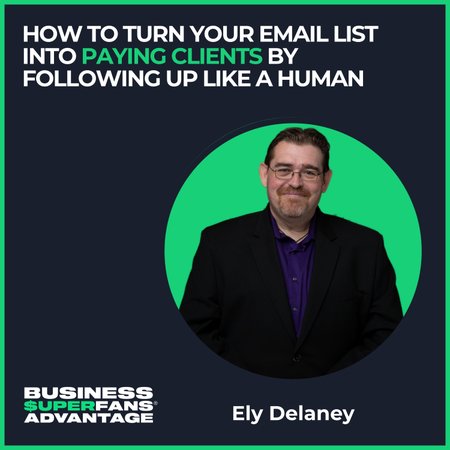
Business Superfans Podcast
How to Turn Your Email List Into Paying Clients by Following Up Like a Human with Ely Delaney | Ep. 225
Ely Delaney, founder of Purple Knight Marketing and author of The Follow-Up Code, shows how to turn your email list into paying clients by following up like a human instead of pitching. If your list is big, your open rates are low, and your follow-up sounds like every other sales email, the problem isn't email. Ely describes a client who went from about $35,000 to about $110,000 a month, and from 30 to as many as 100 workshop attendees a week, by changing nothing but how he wrote to his people. For service business owners who would rather build relationships than chase sales. Full show notes and transcript: FrederickDudek.com How to Turn Your Email List Into Paying Clients by Following Up Like a Human with Ely Delaney Why This Conversation Matters Most service business owners already have the list: past clients, old prospects, people they met once at an event. What they don't have is a way to stay in touch that people actually welcome. Ely Delaney, founder of Purple Knight Marketing and author of The Follow-Up Code , explains why value-first follow-up beats the pitch, and how changing nothing but your words can wake up a list that has gone quiet for years. Direct Answer You turn an email list into paying clients by following up like a human , not a pitch machine. Ely Delaney's approach: lead with value, write the way you talk, stay in touch consistently, and sell only occasionally. People buy when they're ready, sometimes years later, and consistent, caring follow-up makes you the first person they think of. Key Takeaways Lead with value, and let the sale be an afterthought. Share a book, an idea, or something useful first, so the rare offer gets read instead of sent to voicemail. Write the way you talk. Swap the voice your English teacher taught you for your own stories, style, and quirks; that is what creates an emotional response. Follow up for the long game. Plan for buyers who are ready today, next year, or ten years from now, and keep showing up until they are. Restart a cold list with an apology, not a pitch. Ely's "I'm such a slacker" email simply admits you've been out of touch and asks what's new in their world. Turn a sent email into a conversation. A day or two later, call and ask, "Did you get the thing?" It's a no-threat reason to talk. Thank the people who send you business. Referral partners, vendors, podcast guests, and hosts all keep sending business to people who show appreciation. Know when to send someone elsewhere. If another expert is the better fit, say so; that kind of honesty is what people remember and repeat. Key Insights to Share “Email's not dead, your emails just suck.” — Ely Delaney “We just changed the language. We just changed how we communicated.” — Ely Delaney “Friends make horrible clients, but clients can become amazing friends.” — Ely Delaney Timestamps 0:41 — From chamber networking to follow-up systems — How relationships built Ely Delaney's first business and his follow-up method. 4:28 — Four people, one recommendation — How nurtured relationships turn other people into your sales team. 7:18 — Lead with value, sell as an afterthought — Why a book recommendation earns more attention than a pitch. 14:25 — Relationships run both ways — What hosts, guests, vendors, and referral partners owe each other. 18:10 — From 30 seats to 100 — How changing the language took one client from about $35,000 to about $110,000 a month. 22:24 — The Follow-Up Code — Why writing like you talk makes people feel you're talking to them. 25:22 — Consultative selling plus emotional connection — How a no-pitch talk produced a client of more than four years. 30:35 — The ten-year follow-up — Why you never know when someone will be ready to buy. 33:22 — "Did you get the thing?" — The zero-threat check-in call that restarts conversations. 35:51 — The "I'm such a slacker" email — The re-engagement script behind over $12,000 in sales in one week. One Action Send Ely Delaney's "I'm such a slacker" email this week. Pick the people on your list you haven't contacted in months. Use the subject line "I'm such a slacker," admit you haven't stayed in touch the way you should, promise to do better, and ask one question: what's new and exciting in your world? Sign it with your name. No template, no graphics, no offer. Then compare the replies with what your usual emails get. Freddy D's Take Ely Delaney and I came at this from different directions and landed in the same place. He built his business at chamber events and on stages. I built mine selling software, where my customers became my sales team. Neither of us got there by pitching. What Ely adds is the part most owners skip: the words . His client didn't add a new offer or a new channel. He changed how he wrote to the people already on his list, and the room went from 30 seats to a wall knocked out for 100. That's the point I want service business owners to hear. Your list isn't dead. People are waiting to be treated like people. Send something useful, write like you talk, check in when you don't hear back, and say thank you to everyone who sends business your way. Do that long enough and you get Ely's ten-year call: someone you never sold to, who remembered you anyway. When they're ready, you're the first person they think of. That's a Business Superfan. Resources Purple Knight Marketing — Ely Delaney's company, where he helps business owners put their own voice into their follow-up. The Follow-Up Code by Ely Delaney — Ely's book on relationship-first email follow-up, built on the virtues of Bushido. Available on Amazon and through ConnectWithEly.com. ConnectWithEly.com — Ely Delaney's site, with links to the book and his free Follow-Up Fix mini course. The Go-Giver by Bob Burg — the book Ely keeps on his desk and recommends to everyone, on walking into a room asking who you can help. The Greatest Salesman in the World by Og Mandino — the book recommendation a reader credited with saving her business. Creating Business Superfans® by Frederick Dudek — The playbook for turning everyday customers, employees, and partners into Business Superfans who come back, refer others, and drive repeat revenue, so your business grows with or without you at the center. Get your copy. Revenue Reactor™ — The Intelligent Business Growth System for owner-led service businesses, built on the lessons from every episode of this show plus Frederick Dudek's book and frameworks. Get your free growth score and find out what is holding your business back. No credit card needed. Stop Guessing. Start Scaling. Drive predictable growth with proven, data-driven strategies. Get a complete growth assessment, pinpoint your biggest growth bottleneck, and generate a customized 90-day action plan in under 10 minutes, free at RevenueReactor.AI . About the Guest Ely Delaney is the Founder of Purple Knight Marketing, the author of The Follow-Up Code , and the creator of the Ultimate Follow-Up System, an evergreen process for nurturing relationships by email, social media, text, phone, and face-to-face. He started his first company, a web and graphic design agency, in 1995 and grew it through networking, and since around 2008 he has been speaking on and building relationship-focused follow-up systems. Through ghostwriting and coaching, he helps business owners put their own voice, stories, and personality into the words they send. Connect With Ely Website: ElyDelaney.com LinkedIn: linkedin.com/in/elydelaney Guest Offer Ely is offering listeners The Follow-Up Fix, a free mini-course on the five biggest mistakes he sees people make with email marketing and what to do instead. Find it, along with The Follow-Up Code , at ConnectWithEly.com (that's E-L-Y).
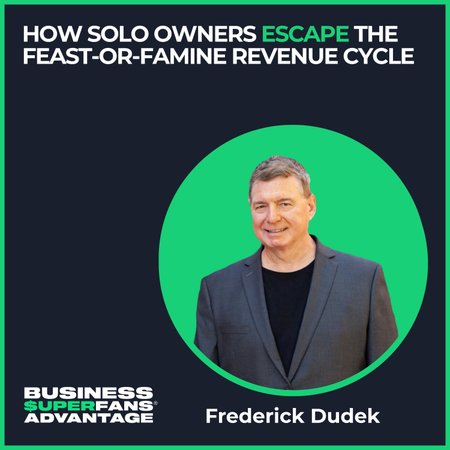
Business Superfans Podcast
How Solo Business Owners Break the Feast-or-Famine Cycle and Build Steady Revenue
Frederick Dudek (Freddy D) shows solo business owners how to break the feast-or-famine cycle and build steady revenue, using lessons from guests Andy Audate, Kristen Nolan, and Kanika Vasudeva. If you hunt for work, deliver it, and then find the pipeline empty again, the answer isn't marketing harder; it's building a business where revenue comes back to you. Andy Audate described a client who went from about $80,000 a year to $60,000 a month over roughly four years once automated follow-up replaced manual selling. For solopreneurs, freelancers, and solo service providers. Full show notes and transcript: FrederickDudek.com How Solo Business Owners Break the Feast-or-Famine Cycle and Build Steady Revenue Why This Conversation Matters For a solo owner, there is no sales team to keep the pipeline full while the work gets done. Frederick Dudek (Freddy D) looks at what owners around the world say they are struggling with most, and for solopreneurs the answer is the revenue roller coaster. He explains why the fix isn't more hunting , and pulls three practical fixes from his conversations with Andy Audate, Kristen Nolan, Kanika Vasudeva, and David Ebner. Direct Answer Solo business owners break the feast-or-famine cycle by building revenue that comes back to them instead of hunting for new work. Give every client a reason to stay after the job, earn introductions rather than chasing referrals, and let a simple system handle follow-up and invoicing. Steady revenue comes from retention, reputation, and introductions. Key Takeaways Ask what each client still needs after the job. A maintenance plan, a quarterly review, a retainer, or an annual checkup turns a finished project into revenue that keeps arriving. Close the thank-you gap. A no-agenda "how are you doing?" after the sale keeps you remembered, and being remembered is how the phone rings. Ask for introductions, not referrals. Someone vouching for you directly does the trust-building for you, which matters most when you're the only salesperson. Pass the 15-second test. If people can't explain what you do in one sentence, they can't introduce you. Let a system remember for you. A simple opt-in and a written email sequence keep talking to past clients, vendors, and partners while you're on deadline. Automate invoices and reminders. Collecting money you've already earned shouldn't depend on working up the nerve on a Tuesday afternoon. Keep the human part human. Use technology as a step in the process, not a shortcut: the system carries the message, and you supply the personal touch. Key Insights to Share “The fix isn't more hunting, it's building a business where revenue comes back to you.” “Being remembered is how the phone rings.” “The system carries the message, you still supply the human part.” Timestamps 0:00 — 48% of solo owners have gone a month with no income — What owners in 57 countries say they're struggling with most. 1:05 — The feast-or-famine trap — Why hunting, delivering, and hunting again keeps the pipeline empty. 2:13 — Fix one: stop ending the relationship at the invoice — How Andy Audate's move to an ongoing offer changed his business. 3:24 — The thank-you gap — Why a no-agenda check-in keeps you remembered and the phone ringing. 3:43 — Fix two: get introduced instead of hunting — The difference between a referral and an introduction, from Kristen Nolan and Kanika Vasudeva. 5:01 — Kanika Vasudeva's 15-second test — Whether a stranger can tell what you do fast enough to introduce you. 5:11 — Fix three: let a system do the follow-up — Automated sequences, invoicing, and David Ebner's caution about shortcuts. 6:21 — Where steady revenue really comes from — Why most solo owners live at reach and how to get the middle working. 6:47 — Your one action this week — Map what past clients still need and ask your five happiest clients for an introduction. One Action List every client you've worked with in the last 12 months. Next to each name, write one thing they still need from you now that the job is done. Then pick your five happiest clients and send each of them a no-pitch thank-you. With two of them, add one question: "Who's one person you know who should know me?" That's asking for an introduction, not a referral. Freddy D's Take When I went looking for what solo owners struggle with most, I expected rising costs to top the list. It tied. The other answer was the roller coaster: a great month, then a month spent refreshing the bank app. I see the same trap over and over. You hunt, you find work, you deliver it, and while you're delivering, nobody is hunting. The advice to market harder assumes there's someone else to do it. For a one-person business, there isn't. What struck me, pulling this episode together, is that my guests had already handed us the answer from three directions. Andy Audate stopped selling one-time projects. Kristen Nolan and Kanika Vasudeva showed why an introduction beats a referral. And Andy, David Ebner, and my own cash flow episode all point to letting a system remember what you won't. Put them together and it's the middle of the chain: the clients who stay, the reputation they carry, and the introductions they make. The fix isn't more hunting, it's building a business where revenue comes back to you. Resources Simply Business solopreneur survey — the survey of 1,000+ solo owners cited for the 61% and 48% figures ( The Power of One: 2025 Solopreneur Report ). Global small business survey across 57 countries — the source for unpredictable income as the top struggle and the 45% cash flow figure (Bookipi, The Cost of Doing Business: A Global Small Business Snapshot ). Adobe Express / Talker Research — the survey behind five hats a day and 200+ extra hours a year. Episode 216 with Andy Audate of Progreta — moving from one-time projects to an ongoing offer, and the automated selling machine. Episode 222 with Kristen Nolan of Interview Valet — why an introduction beats a referral. Episode 218 with Kanika Vasudeva — the 15-second test. Episode 210 with David Ebner — technology as a step in the process, not a shortcut. Episode 221, Freddy D's Playbook — late payments and automating your invoicing. Creating Business Superfans® by Frederick Dudek — The playbook for turning everyday customers, employees, and partners into Business Superfans who come back, refer others, and drive repeat revenue, so your business grows with or without you at the center. Get your copy. Revenue Reactor™ — The Intelligent Business Growth System for owner-led service businesses, built on the lessons from every episode of this show plus Frederick Dudek's book and frameworks. Get your free growth score and find out what is holding your business back. No credit card needed. Stop Guessing. Start Scaling. Drive predictable growth with proven, data-driven strategies. Get a complete growth assessment, pinpoint your biggest growth bottleneck, and generate a customized 90-day action plan in under 10 minutes, free at RevenueReactor.AI .
